Arya News - The sandalwood dhoop lingering in the sanctums of Hindu temples; the rose and saffron agarbatti enveloping Sufi dargahs; the resinous benzoin smoke drifting from ornate Zoroastrian windows at dusk—this is the scented soul of India.
KOLKATA – The one sublime ritual that has connected Indians across faiths, communities and regions is the burning of incense in all its incarnations.
That sandalwood dhoop that permeates the air in sanctums of Hindu temples, the rose and saffron agarbatti that envelopes Sufi dargah mausoleums, the sweet, resinous smoke from benzoin chunks over charcoal that escapes the large ornate windows of old Zoroastrian homes at sunset, that’s India’s scented soul.
Like whiskey, uisce beatha (water of life) in Gaelic, is inseparable from Ireland’s history, agarbatti incense pillars Mysore’s humble yet haloed heritage that has fragranced Indian devotion for eons, simplicity, its core ingredient.
Natural is Spiritual
A market saturated with synthetic, fancy, overpriced ‘chandan’ and ‘oudh’ incenses sure needs a whiff of purity. “Anything derived from nature touches the spirit directly and elevates our consciousness”, smiled Vinay S Raj, the third generation proprietor of Suresh Agarbathi Works Mysore. Synthetic materials employed in any aromatic endeavor, often lack depth and merely imitate the original materials.
After visiting nearby Mandya, my paternal great grandmother’s birthplace, I arrived in Mysore or ‘Mysuru’ to meet with the young, passionate incense manufacturer for some aromatic uisce beatha!
Vinay’s grandfather Mr. Devaraj, who initially owned a handicrafts business back in the 50s, moved over to agarbatti manufacturing in 1968. Having supplied finished incenses packed with their leitmotif white lable, natural cellophane paper and cotton threads to several renowned agarbatti companies, as they still continue doing, the family eventually emerged as an individual fragrance house with their own signature products.
Ranging from just ₹5 a packet to their premium range priced at ₹ 2400, each of their agarbattis and dhoops embody south India’s centuries old authentic aromatic profiles that encompass resins (sambrani), sandalwood, natural florals, herbs and green accords. “Our raw materials include natural ingredients like flower petals, herbs, roots and natural aroma compounds sans synthetic chemicals. These are blends of various essential oils that are extracts”, Vinay explained.
Hand-rolled agarbattis, their forte, is today a dying art. “A few years down the line, hand-rolled incenses will be an endangered cottage industry and will eventually become extinct. We won’t have any artisans left”, he lamented, as we sipped tantalizing filter coffee at a bustling local eatery.
Surprisingly, like with the Gulf’s Arabian ‘bakhoor’ incense tradition , Mysore’s agarbatti making is also a woman-centric craft. “Hand-rolling is a specialised skill that is passed down from mother to daughter. Often, the daughters imbibe it naturally by just watching their mothers at work”. However, Vinay believes that this meticulous craft is finding fewer takers, women from artisans’ families choosing other, diverse career paths.
Process of Passion
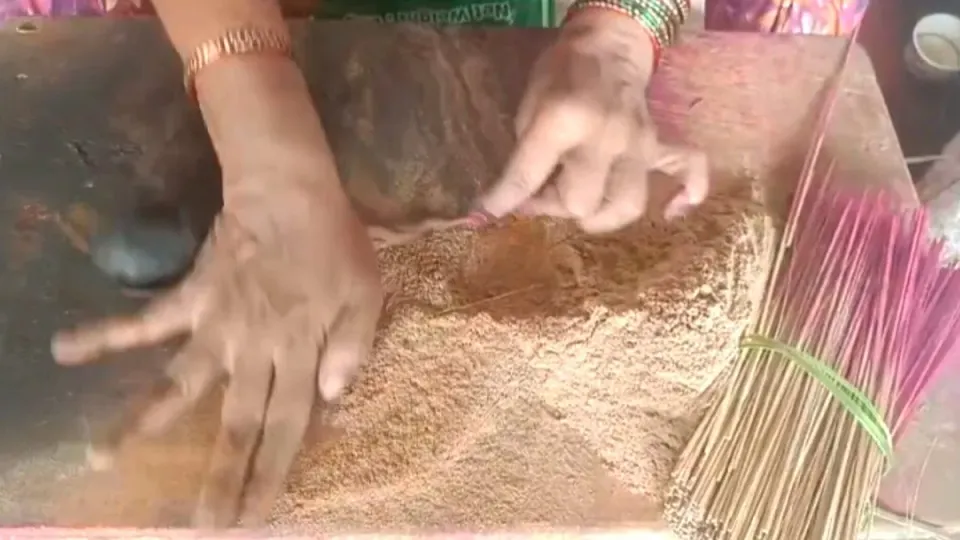
The sheer passion, patience and painstaking labor that goes into creating a simple agarbatti emanating blissful fragrant smoke, is truly astounding. Unlike machine made incenses that require lesser effort, hand-rolled ones call for specialised expertise and hours of intense toil.
Over a relaxed afternoon stroll along rows of quaint old bungalows, fleeting strains of Carnatic Veena filling the air, Vinay articulated the process.
Bamboo, charcoal and jigit (binding agent) are the core raw materials involved in agarbatti making along with perfume oil blends, masala powders and natural materials like petals, herbs, roots, stems and spices. “There are around 90 such ingredients. Our formulae based on permutations and combinations decide the final aroma. Many of our agarbattis are devoid of charcoal”, he explained.
“Often, combinations of just wood powders (dust) without perfume oils leads us to a completely new olfactive dimension”, he added. The use of perfume oil blends, however, remains extensive. These are allowed to ‘sit’ for around fifteen days for maturation, after which the other materials are added to the oil blends and this mixture is allowed to sit for yet another three days. “It’s after nearly twenty- five days that we can finally package our incenses after a tedious and lengthy process that also involves drying them in the blazing sun and in contrast, placing them in cool rooms”.
The magic of handmade agarbattis lies in the core layer or ‘ata’ that offers the actual aromatic experience while the outer ‘noorva’ provides the initial top note.
Turning the complex concoction of varied materials into an agarbatti stick is the work of deft female hands.
Depth and Diversity
Spiritual depth invigorates the senses through the olfactive diversity in Suresh Agarbathi Works’s offerings. Their simplistic Mysore Gold Special Sambrani agarbatti calms the nerves instantly with the scent of sweet, resinous benzoin.
Reminiscent of heritage cream-walled homes with thatched roofs in Mumbai’s Parsi colonies, this scent evoked instant nostalgia in me.
The Mysorean house’s pack of five celebrates nearly all of India’s age-old accords of an authentic woody, creamy, smoky Mysore chandan, an evocative, deep amber, a mysteriously musky kasturi, loban (resin) and a traditional floral, incency maddipal typical to Mysore’s cheerful winding streets and temple environs.
A versatile nose, Vinay S Raj has formed a niche both at home in India and internationally, spreading the scent of his hometown’s hand-rolled incense tradition across the globe. While he offers customized selections of premium agarbattis packed with royal panache in a sturdy south Indian vintage-like Rosewood box, his export selection includes eclectic offerings with the notes of captivating south Indian jasmine, lush damask roses, indigenous Indian resins and Mysore sandalwood.
Suresh Agarbathi Works’s signature Sandalwood dhoop cones come with an ornate, wooden incense burner that ensures safety as well as portability .
Sandalwood finds mention in the classical Indian ‘Ashtagandha’ (selection of eight spiritual scents), true to which, these dhoops create the perfect Vedic atmosphere with the untainted aromas of natural Indian sandalwood or Santalum Album, considered the world’s finest, blessed with the highest santalol content.
The most ethereal and meditative incense by this house is of course, their Garden Agarbatti made of dried flower petals and essential oils. Instant therapy unfolds as the stress begins escaping the body. Nature’s innocence in an aromatic avatar!
As viral reels rave about Dubai’s gilt-edged bakhoors and flashy, ambitious Indian incense startups, Mysore’s maverick with his disdain for social media hype and glamor, casts a silent spell on the olfactory with the grandeur of humility, fragranced and rolled with care.
(The author is an independent writer, multi-linguist, perfumer and musician with a passion for the pen)