Arya News - Ayesha Tariq says that a Democratic-controlled Congress might not increase U.S. generosity or policy consistency, but it would provide greater scrutiny, institutional restraint, and accountability.
DHAKA – Bangladesh has spent nearly two years paying for decisions made in Washington without having any say in them. US tariffs on its garments have been revised five times since April 2025, the war against Iran has sent the cost of its imported fuel soaring, and a strong dollar has made every foreign debt repayment more expensive. On 3 November, Americans will elect a new House of Representatives and about a third of the Senate. A Democratic Congress would not restore the America that Bangladesh dealt with for half a century, but it could restore some restraint on the administration it faces today, and Dhaka has every reason to welcome that restraint.
Nowhere has the absence of such restraint been clearer than in trade policy. Washington announced a 37 per cent tariff on Bangladeshi goods in April 2025, imposed 20 per cent in August and settled on 19 per cent under a trade agreement signed on 9 February this year. Eleven days later, the US Supreme Court ruled that the emergency law underpinning those duties gave the president no authority to impose them. A temporary 10 per cent tariff followed, replaced in July by a new measure under Section 301 of the Trade Act, and Dhaka is still seeking clarity on what its February agreement is worth.
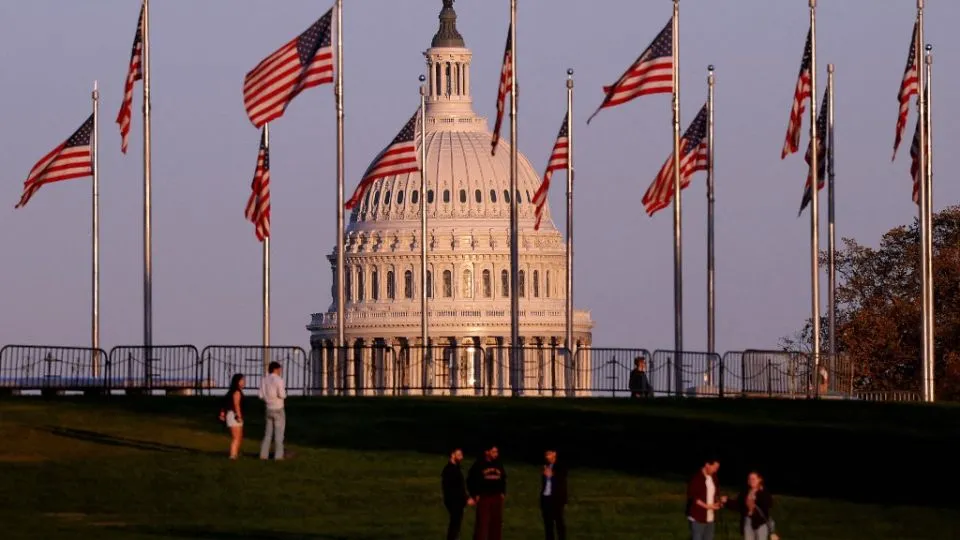
American voters appear ready to deliver their verdict. Polls and forecasters suggest that Democrats could win the House comfortably and gain a narrower advantage in the Senate, consistent with a long historical pattern in which the president’s party has lost House seats in 20 of the 22 midterm elections since 1938. This time, discontent is driven primarily by the cost of living. The vote will also reflect whether Americans support an administration that treats alliances as transactions and shows little interest in the democratic partnerships that once defined American leadership. That is the broader question the rest of the world will be watching.
A Democratic victory would not, however, give Congress the power to reverse the administration’s policies. Democrats are unlikely to secure two-thirds of either chamber, meaning a presidential veto would remain a significant obstacle. A war powers resolution aimed at ending the Iran conflict would struggle to overcome such a veto. Tariffs demonstrate how readily the White House can circumvent congressional constraints. The temporary 10 per cent levy required congressional approval to remain in force beyond 150 days; rather than seek it, the administration shifted to Section 301, which requires no such approval. What a Democratic majority could do is provide a check on executive power, challenging both the tariffs and the war while forcing officials to defend publicly decisions they currently make with limited scrutiny.
The US buys roughly a fifth of the country’s garment exports, and the damage over the past 18 months has resulted less from any single tariff rate than from the uncertainty surrounding successive changes. An American buyer placing an order for spring delivery needs to know the final landed cost. The risk has not disappeared, as the administration has demonstrated its ability to impose new duties under Section 301 without seeking congressional approval.
For Bangladesh, that counterweight matters first in trade. The US buys roughly a fifth of the country’s garment exports, and the damage over the past 18 months has resulted less from any single tariff rate than from the uncertainty surrounding successive changes. An American buyer placing an order for spring delivery needs to know the final landed cost. The risk has not disappeared, as the administration has demonstrated its ability to impose new duties under Section 301 without seeking congressional approval. A Congress empowered to investigate cannot prevent such measures on its own, but it can raise the political cost of each escalation. For Bangladeshi exporters, predictability may be worth more than a percentage point or two in tariff reductions.
That predictability would, however, come with demands of its own. Democrats have traditionally pressed harder on labour standards, and it was the Obama administration that suspended Bangladesh’s trade preferences in 2013 following the Rana Plaza collapse. A Democratic-controlled House would therefore be expected to scrutinise factory conditions and supply chains as closely as it scrutinises the president’s trade policies.
In foreign affairs, Congress has less power to restrain the president, but its influence still matters. American presidents have traditionally enjoyed considerable latitude in foreign policy, and a president facing constraints at home may have greater incentives to exercise that authority abroad. This is one of the rare American elections in which foreign policy is a prominent electoral issue, as voters feel the economic consequences of the war against Iran whenever they fill their fuel tanks. The bigger question is how President Donald Trump will behave once the midterms are over and no further national election stands between him and 2028. For Bangladesh, the war has been the costliest American decision of all. When the Strait of Hormuz closed, all three of its long-term LNG suppliers declared force majeure. QatarEnergy later halved its scheduled deliveries for 2026, and Dhaka has had to purchase more than 30 cargoes on the spot market, some at twice their pre-war prices.
No vote in Congress can reopen the strait, but a Democratic majority could at least seek to bring the war to an end. It could hold hearings on its costs, force repeated votes on war powers and seek to attach conditions to the funding a prolonged conflict requires. Such measures could raise the political cost of continuing the war and strengthen the case for a negotiated settlement. Even if the president vetoes the legislation Congress passes, that pressure would matter to Bangladesh, because a diplomatic resolution could help bring down the price of its imported gas.
The war also affects Bangladesh through the US dollar. The country repaid a record $4.49 billion in foreign debt in the 2025–26 fiscal year, mostly in dollars, and the government expects that bill to approach $7.6 billion annually by 2028–29. Expensive oil has kept American inflation high, and the Federal Reserve, which raised interest rates in September for the first time since 2023, has signalled that further increases may follow. Higher American interest rates attract capital into dollar-denominated assets, and each time the dollar strengthens, Bangladesh needs more taka to service the same debts and pay for the same fuel imports. Washington’s own borrowing adds to the pressure, as the government must offer investors increasingly higher returns to sustain its borrowing. A dispute over the federal budget before funding expires on 11 December could intensify that pressure. A Democratic Congress could seek to restrain borrowing by challenging spending proposals it considers fiscally unsustainable. It cannot directly bring down oil prices, however, and the dollar could therefore remain strong for some time, regardless of the outcome on 3 November.
Above all, the war points to a broader loss. For 80 years, the US helped establish and largely uphold the rules on which smaller economies depended, including open markets, a rules-based trading system with an impartial dispute settlement mechanism and development finance through institutions it helped lead. Bangladesh built its garment industry within that system, on the assumption that market access, once negotiated, would remain relatively stable. The US once expected other countries to uphold those standards. It now appears increasingly willing to set them aside when they become inconvenient, imposing tariffs under a law the Supreme Court found did not authorise them, dismantling its aid agency within weeks and signing trade agreements whose legal foundations were subsequently challenged. A Democratic majority in Congress could signal renewed support among American voters for elements of that earlier approach.
No vote in Congress can reopen the strait, but a Democratic majority could at least seek to bring the war to an end. It could hold hearings on its costs, force repeated votes on war powers and seek to attach conditions to the funding a prolonged conflict requires. Such measures could raise the political cost of continuing the war and strengthen the case for a negotiated settlement. Even if the president vetoes the legislation Congress passes, that pressure would matter to Bangladesh, because a diplomatic resolution could help bring down the price of its imported gas.
The election could also influence the future of the concessional financing on which Bangladesh depends. Congress, rather than the White House alone, approves America’s contributions to the World Bank’s International Development Association (IDA) and the Asian Development Fund, which provide financing to developing countries at low or no interest. Bangladesh is the largest borrower from IDA, with $22.7 billion outstanding in March this year. In July last year, the Republican-led House Appropriations Committee approved a spending bill that excluded contributions to both funds, while the administration’s budget proposal for next year asks Congress to reduce the World Bank contribution from approximately $1.07 billion to $867 million. A Democratic-controlled House could be more inclined to protect such funding rather than support further reductions. If these funds shrink, Bangladesh may have to rely more heavily on financing from China, Gulf countries and lenders such as the BRICS New Development Bank, which it joined in 2021. Such financing could involve higher borrowing costs or different political and commercial conditions. Bangladesh would need to engage with these partners on terms consistent with its own interests, recognising that none can necessarily replace the role the US once claimed in supporting the international economic order.
Bangladesh cannot vote on 3 November, but it will live with the consequences of the result. A Democratic Congress would not necessarily make the United States more generous or even more consistent. It could, however, subject the administration to greater scrutiny and accountability. For an economy that can ill afford another two years of unpredictable decisions from Washington, greater institutional restraint could offer some much-needed stability.
Ayesha Tariq , CFA, is the CEO and co-founder of MacroVisor, an independent global macroeconomic research and consulting firm.