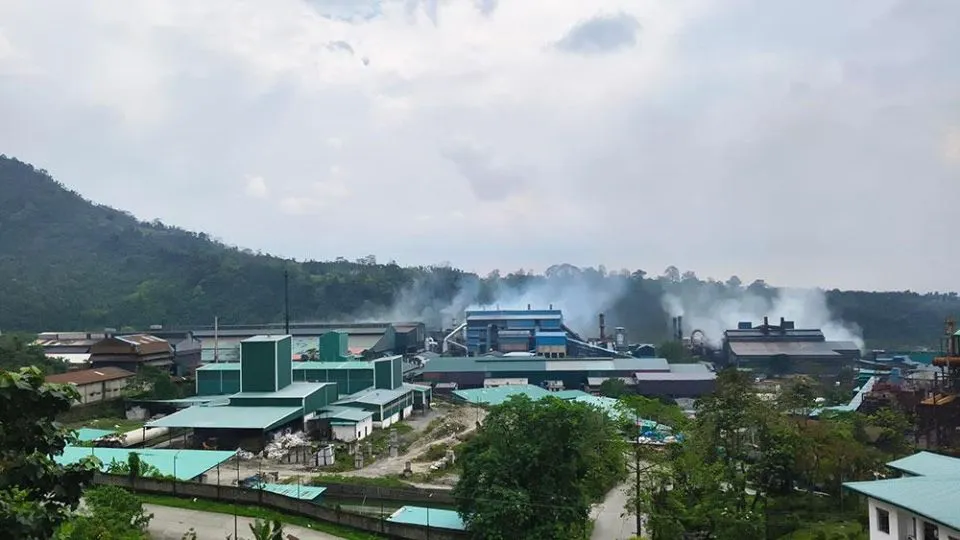
Arya News - Stranded consignments and tightened border controls in West Bengal are squeezing Bhutan`s manufacturing sector, leaving factories scrambling for expensive raw material alternatives as production slows.
THIMPHU – Bhutanese ferroalloy industries are facing raw material shortages and rising production costs after West Bengal authorities restricted the movement of low-ash metallurgical coke (LAMC) consignments at check posts along the India-Bhutan transit routes from September 13.
The supply bottlenecks have forced several factories in Samtse and Pasakha, Chukha, to partially halt production as they struggle to secure the essential raw material.
The movement of LAMC from Meghalaya and Assam into Bhutan has been severely disrupted at the Chagolia, Srirampur and Bakshirhat check posts.
Manufacturers rely on these routes to import the processed carbon material, which is used as a reducing agent in the production of ferroalloys, including ferrosilicon.
Industry representatives say LAMC is processed from coal, but its characteristics, refining process and industrial applications distinguish it from raw coal. However, consignments face delays under restrictions governing the movement of raw coal through West Bengal.
The disruption has left manufacturers with critically low stocks, forcing some to turn to more expensive alternatives to keep their operations running.
One ferroalloy plant official said the factory had exhausted its LAMC stock and was relying on semi-coke, a more expensive substitute, to maintain basic operations.
“We have completely run out of coke and are currently relying on semi-coke, which is expensive to purchase,” the official said.
The official added that the use of costly substitutes was increasing operating expenses, while shortages were making it difficult to maintain normal production levels. If the restrictions continue, manufacturers could face further production cuts, financial losses and difficulties in sustaining employment.
The impact could also extend to workers, suppliers and businesses that depend on the domestic ferroalloy industry.
Following unsuccessful negotiations between suppliers and border authorities to restore regular transit, the Association of Bhutanese Industries (ABI) has sought government intervention to resolve the problem.
In a letter to the Department of Trade dated October 14, ABI urged the government to engage Indian authorities through diplomatic channels to ensure the uninterrupted movement of LAMC from Meghalaya and Assam through West Bengal to Bhutan.
The association asked the department to coordinate with relevant Indian authorities, including the Government of West Bengal, through government-to-government mechanisms.
ABI also sought formal clearance for consignments accompanied by valid commercial and transportation documents.
While acknowledging India’s regulatory measures, the association maintained that processed LAMC intended for legitimate industrial use in Bhutan should be allowed to pass without disruption.
Importers of Nangal coal from Meghalaya are also facing severe transit restrictions, with West Bengal authorities blocking consignments despite the cargo being permitted up to the Assam border.
Importers had earlier tried to bypass the restrictions by rerouting consignments through Gelephu, but that option is no longer feasible. Attempts to bring consignments through Samdrupjongkhar under a transit arrangement have also failed.
“We tried to bring consignments through Samdrupjongkhar under a transit arrangement, but we could not get through,” an industry official said.
With both alternative routes proving unviable, manufacturers have limited options to secure reliable supplies. They must either absorb the additional costs of alternative raw materials or reduce production to match their dwindling stocks.
The industry is now awaiting government intervention to resolve the transit restrictions and restore the movement of essential raw materials into Bhutan.